Removing a Load-Bearing Wall in a 1970s Huntington Beach Home: What Actually Happens
Most of the homes in Bolsa Chica, Edwards Hill, and the older Seacliff neighborhoods were built between 1968 and 1979. They have exactly the same problem: a wall in the middle of the house separating the kitchen from the dining room or the living room. Forty years of homeowners have lived with that wall, and almost all of them, sooner or later, ask the same question.
“Can we just take that wall out?”
The answer is almost always yes. The cost, the timeline, and the complications depend almost entirely on what’s actually inside the wall — and that’s where the surprises live.
Step One: Figure Out If It’s Load-Bearing
Most walls running parallel to the ridge of the roof are non-load-bearing. Most walls running perpendicular to the ridge are load-bearing. That’s a useful first guess but it’s not reliable enough to start swinging a hammer.
The real test is in the attic. We pop the access hatch, walk out over the wall in question, and look at the ceiling joists overhead. If the joists span past the wall without breaking, the wall is non-load-bearing — you can take it out with a regular saw and a couple of guys. If the joists either bear on top of the wall or are spliced over it, the wall is holding up the second story or the roof, and you cannot remove it without engineering and a beam.
In Huntington Beach 1970s homes, more than 70% of the walls people want to remove turn out to be load-bearing. It’s the way these tract homes were framed.
Step Two: Get a Structural Engineer Involved
Once we know a wall is load-bearing, we bring in a licensed structural engineer to size the beam that will replace it. The engineer needs to know:
- Span length (how far the beam has to reach between supports)
- Tributary load (how much roof or floor weight is bearing on it)
- Whether the beam can be flush with the ceiling or has to drop below it
- Whether the existing footings can carry the new point loads at each end
The engineer’s stamp on the plans is what the City of Huntington Beach will accept for permit. Without it, the inspector won’t approve the work. Engineering for a typical residential beam runs $1,200 to $2,800 depending on complexity.
Step Three: Decide on Beam Type and Location
There are three common beam types for residential wall removals:
LVL (laminated veneer lumber) beams. The most common choice for spans up to about 18 feet. Looks like an oversized 2x10 or 2x12 made of glued plies. Strong, stable, dimensionally consistent. The beam shows in the ceiling unless we drop the ceiling on either side to hide it.
Engineered glulam beams. Used for longer spans or higher loads. More expensive than LVL, similar look. Often used when the architect wants the beam to be exposed as a design element.
Steel I-beams. Required when the load is too high or the span is too long for wood. These have to be craned in through the roof or fed through a wall opening. They’re significantly more expensive — but they let you remove walls that wood beams cannot replace.
For most 1970s tract homes in HB, we use LVL beams. The decision comes down to whether the beam is going to be flush (concealed in the ceiling) or dropped (visible below the ceiling line). Flush is more architecturally clean. Dropped is significantly cheaper because we don’t have to cut and re-frame the ceiling joists to receive the beam.
A flush beam install on a typical 14-foot span with LVL is $4,500 to $7,500 in labor and materials, plus engineering and permits. A dropped beam install on the same wall is $2,800 to $4,500.
Step Four: The Things That Surprise Homeowners
This is the part nobody warns you about. Once you open the wall up, you discover what’s actually inside it.
Electrical. Every load-bearing wall in a 1970s home has at least one electrical run inside it, usually more. Sometimes it’s the wiring for the kitchen lights. Sometimes it’s the only run feeding half the bedrooms. Either way, those wires have to be rerouted before the beam goes in. Add $800 to $2,500.
Plumbing. Less common, but it happens. We’ve found drain lines, supply lines, and gas lines inside walls that “shouldn’t” have any of them. A plumbing reroute can add $1,500 to $4,000 and a day or two to the schedule.
HVAC. Air return ducts running through the cavity of a load-bearing wall are surprisingly common. Rerouting a duct sounds simple but rarely is, because the new path has to deliver the same airflow without creating noise or condensation. $600 to $2,500.
Asbestos. Homes built before 1980 sometimes have asbestos in the plaster, the insulation, or the popcorn ceiling. If we suspect it, we test it before demolition. Abatement is $1,500 to $4,500 if it’s there.
The total for “stuff we found inside the wall” averages about $3,500 on a typical project, but I’ve seen it go as high as $14,000 on the worst-case homes. Honest contractors build a 10–15% contingency line into the estimate for exactly this reason.
Step Five: The Finished Result
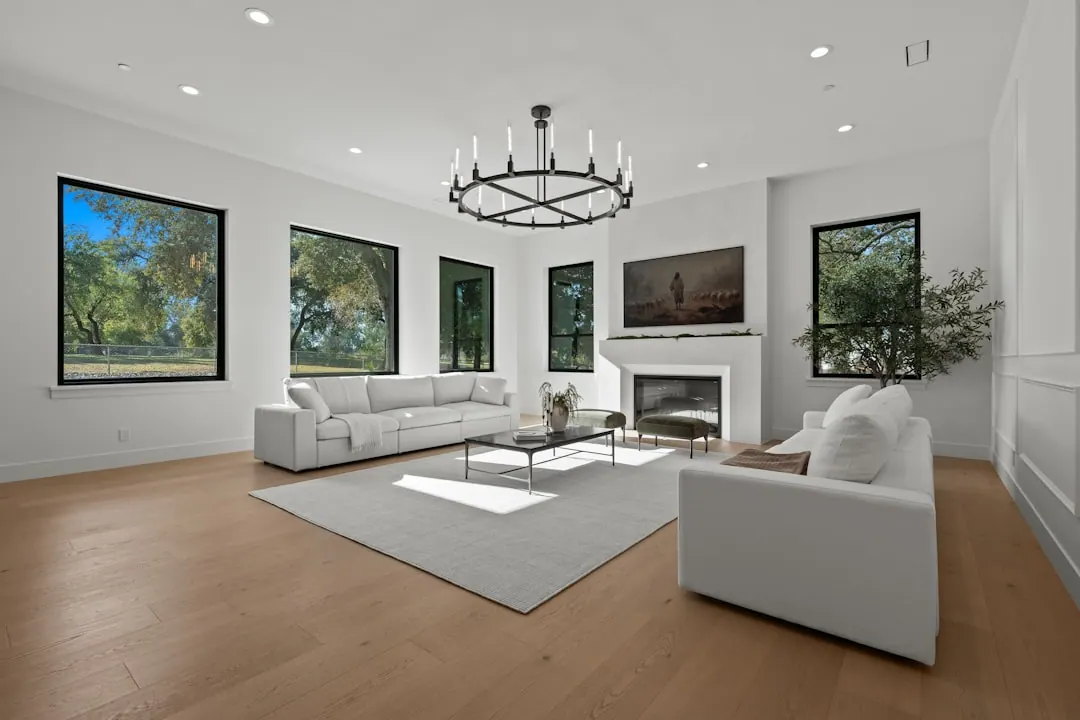
When the beam is in, the demo is done, the systems are rerouted, and the drywall is patched and painted, the result is what every homeowner pictured at the start: an open floor plan that connects the kitchen to the rest of the home. Light flows from the back windows all the way through to the front. The cook is no longer isolated. The whole house feels twice as big.
The total budget for a typical load-bearing wall removal on a Huntington Beach 1970s home, with engineering, permits, beam, electrical reroute, drywall patch, and finish paint, is $9,500 to $18,000 depending on span length, beam type, and what we find inside the wall. Two to three weeks of work if we’re not waiting on the inspector.
Want to Know If Your Wall Can Come Out?
Bring us out for a free in-home consultation. We can usually tell you within 30 minutes whether the wall is load-bearing, what beam type it would need, and a rough budget range. Call Javier at (714) 794-5503 or request an estimate online.